Η Αστρονομική Εικόνα της Ημέρας από τη NASA
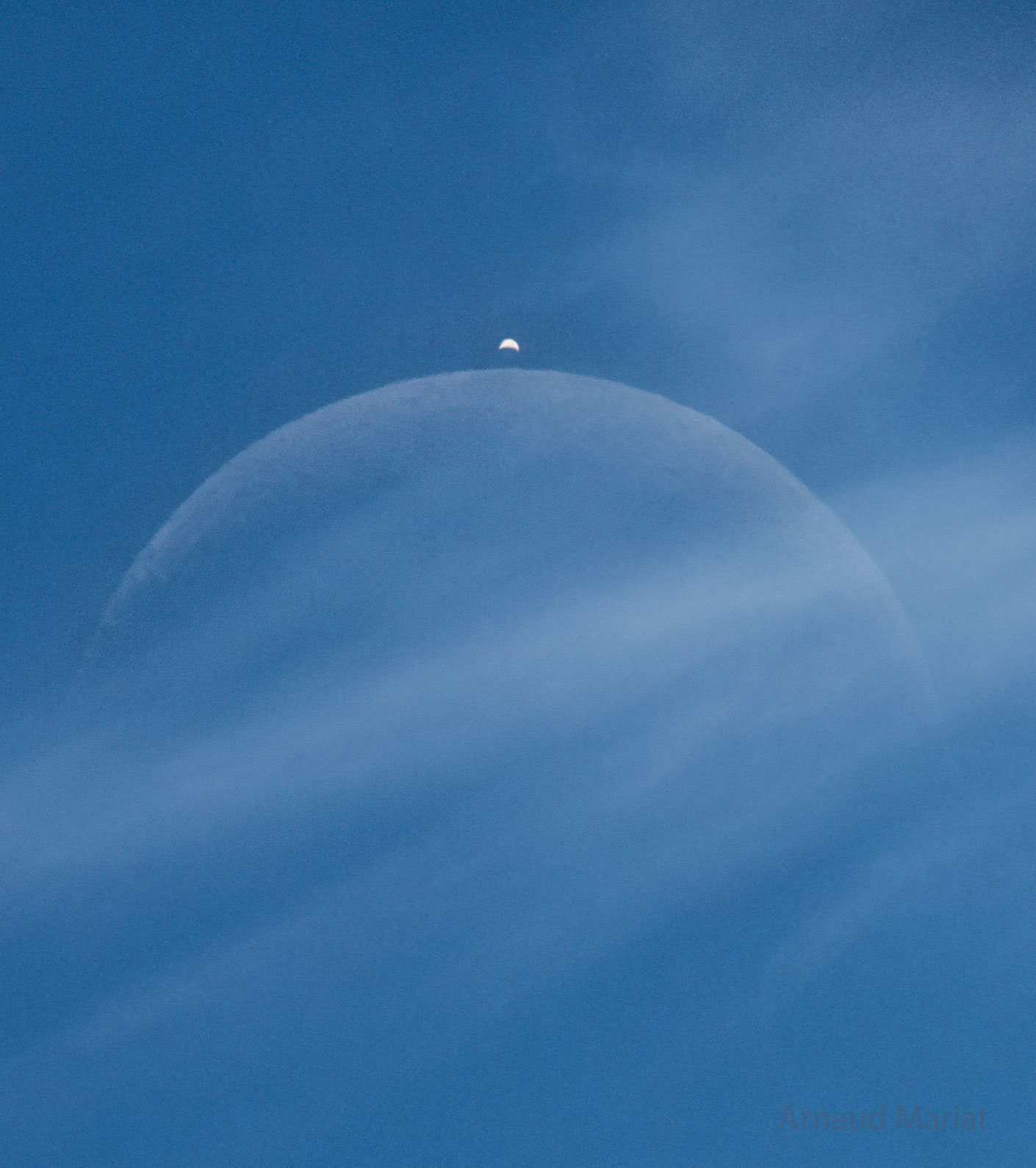
A Daytime Eclipse: Moon Occults Venus
15/09/2026
There was something behind the clouds. Upon close inspection, it was the Moon, which was hard to see yesterday around noon above the small village of Cessy, France. But soon, it was not only the Moon. As expected, a bright dot suddenly appeared from behind the Moon -- the planet Venus far in the distance. Captured in the single featured exposure, both appeared to show a crescent phase. The Moon's crescent was quite slight -- with only about 10 percent of its face illuminated by the Sun. In contrast, Venus's crescent was more full -- showing about 25 percent illumination. Venus appeared brighter because it is nearer the Sun and because its clouds are more reflective than the dark lunar surface. An occultation of Venus by the Moon is visible to only about 10 percent of the Earth, but in yesterday's event even most of that was experiencing daytime. APOD's main NASA site is moving: From apod.nasa.gov to science.nasa.gov/apod
Copyright: Arnaud Mariat
Προηγούμενες Αστρονομικές Εικόνες της Ημέρας από τη NASA
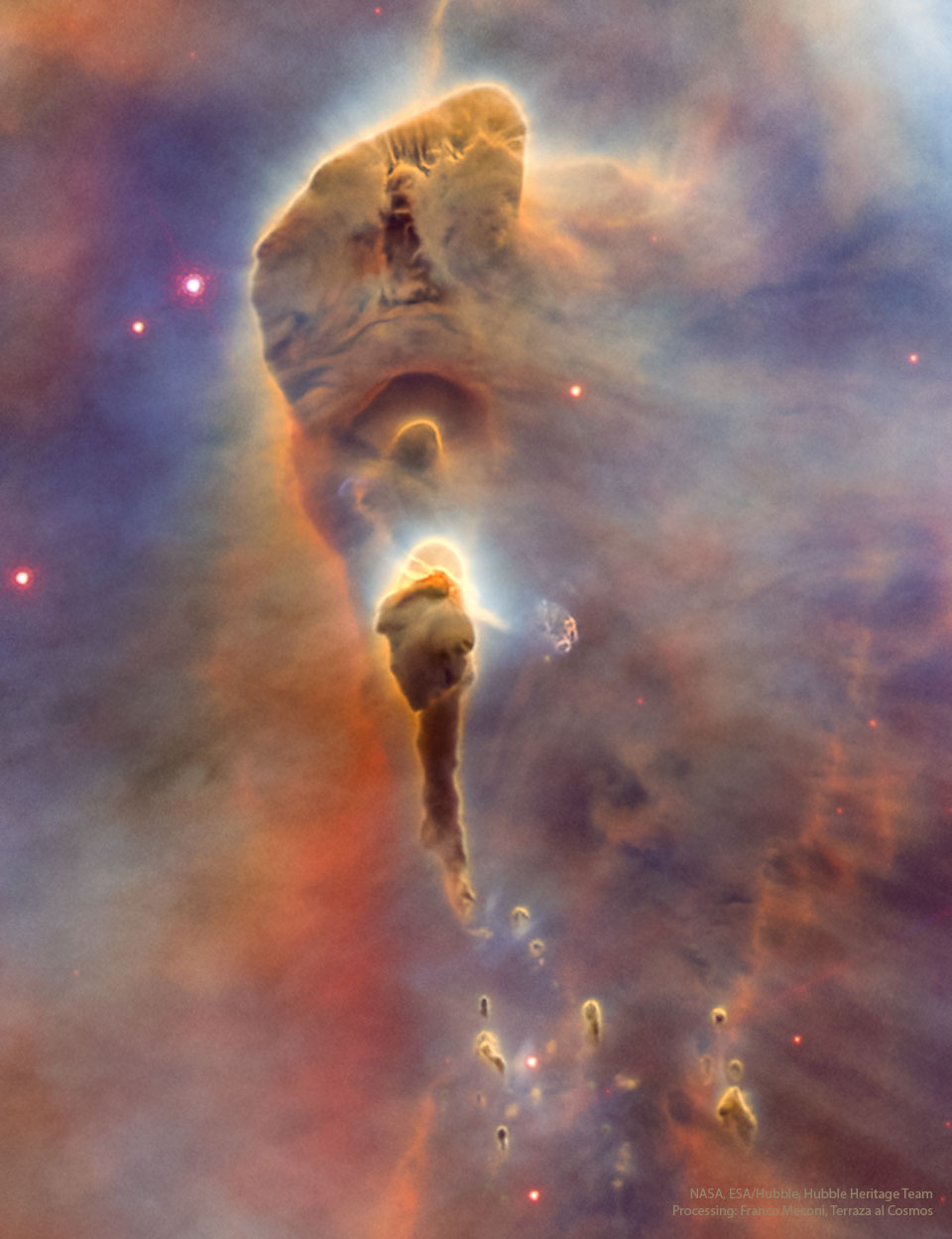
Stars Versus Dust in the Carina Nebula
06/12/2023
It's stars versus dust in the Carina Nebula and the stars are winning. More precisely, the energetic light and winds from massive newly formed stars are evaporating and dispersing the dusty stellar nurseries in which they formed. Located in the Carina Nebula and inside a region known informally as Mystic Mountain, these pillars' appearance is dominated by opaque brown dust even though it is composed mostly of clear hydrogen gas. Even though some of the dust pillars look like torches, their ends are not on fire -- rather, they are illuminated by nearby stars. About 7,500 light-years distant, the featured image was taken with the Hubble Space Telescope and highlights an interior region of Carina known as HH1066 which spans nearly a light year. Within a few million years, the stars will likely win out completely and the dust torches will completely evaporate.
Copyright: NASA
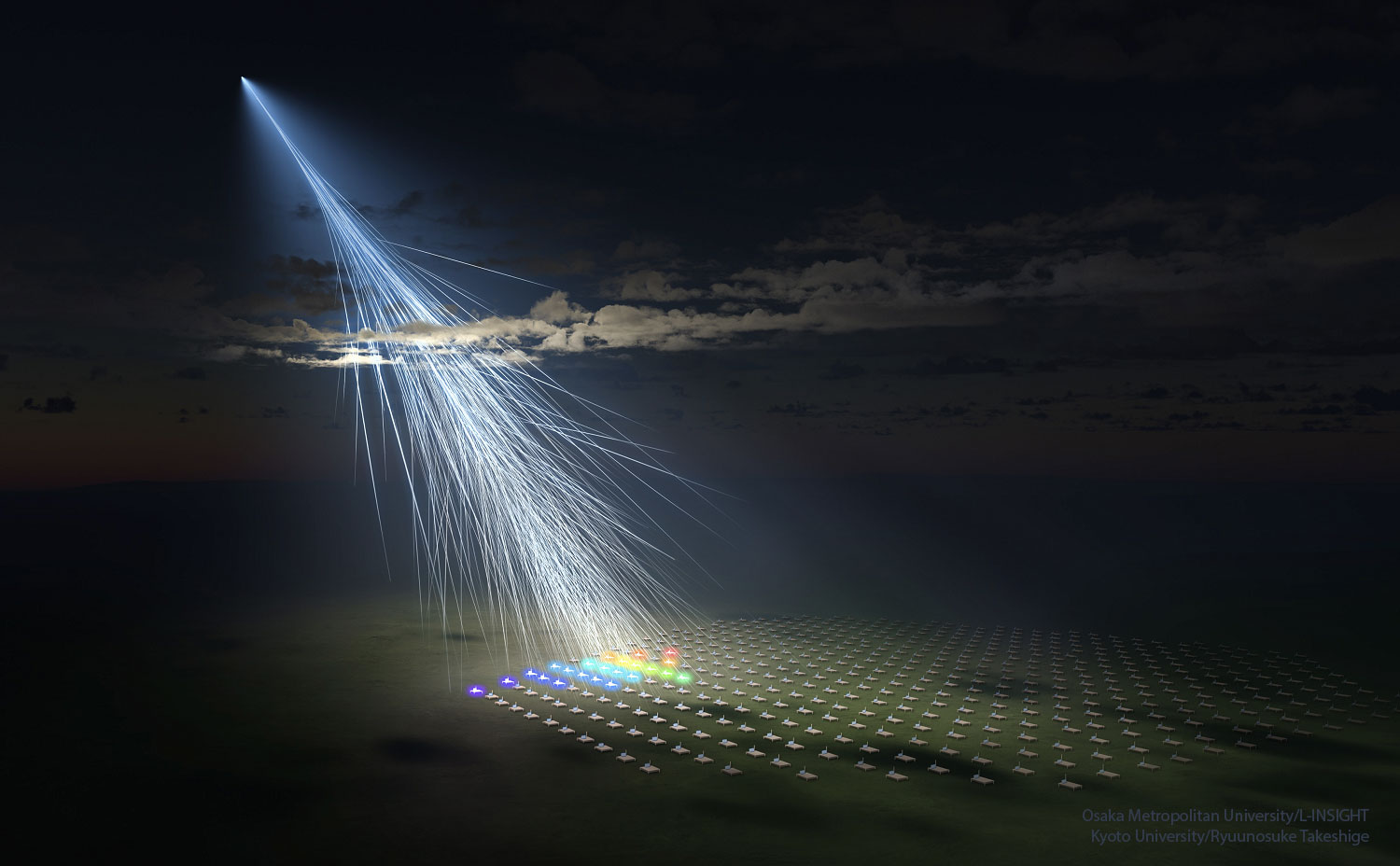
Energetic Particle Strikes the Earth
05/12/2023
It was one of the most energetic particles ever known to strike the Earth -- but where did it come from? Dubbed Amaterasu after the Shinto sun goddess, this particle, as do all cosmic rays that strike the Earth's atmosphere, caused an air shower of electrons, protons, and other elementary particles to spray down onto the Earth below. In the featured illustration, a cosmic ray air shower is pictured striking the Telescope Array in Utah, USA, which recorded the Amaterasu event in 2021 May. Cosmic ray air showers are common enough that you likely have been in a particle spray yourself, although you likely wouldn't have noticed. The origin of this energetic particle, likely the nucleus of an atom, remains a mystery in two ways. First, it is not known how any single particle or atomic nucleus can practically acquire so much energy, and second, attempts to trace the particle back to where it originated did not indicate any likely potential source. Open Science: Browse 3,200+ codes in the Astrophysics Source Code Library
Copyright: NASA
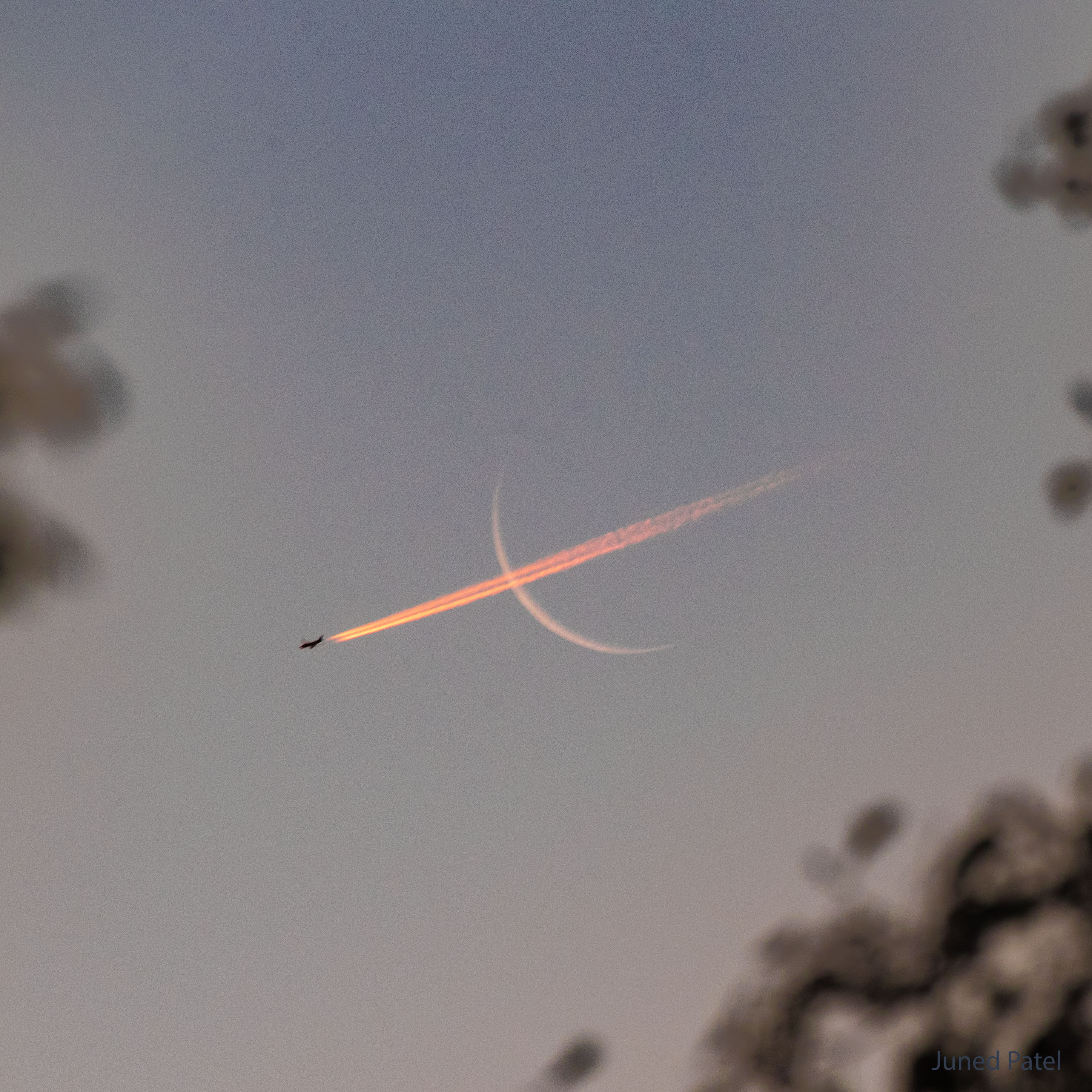
Plane Crossing Crescent Moon
04/12/2023
No, the Moon is not a bow, and no, it did not shoot out a plane like an arrow. What is pictured is a chance superposition. The plane's contrail would normally appear white, but the large volume of air toward the rising Sun preferentially knocked away blue light, not only making the sky blue, but giving the reflected trail a bright red hue. Far in the distance, well behind the plane, the crescent Moon also appears slightly reddened. Captured early last month from Bolton, UK, the featured image was taken so soon after sunrise that the plane was sunlit from below, as was its contrail. Within minutes, unfortunately, the impromptu sky show ended. The plane moved out of sight. The Moon kept rising but became harder to see through a brightening sky. And the contrail gradually dispersed.
Copyright: Juned Patel
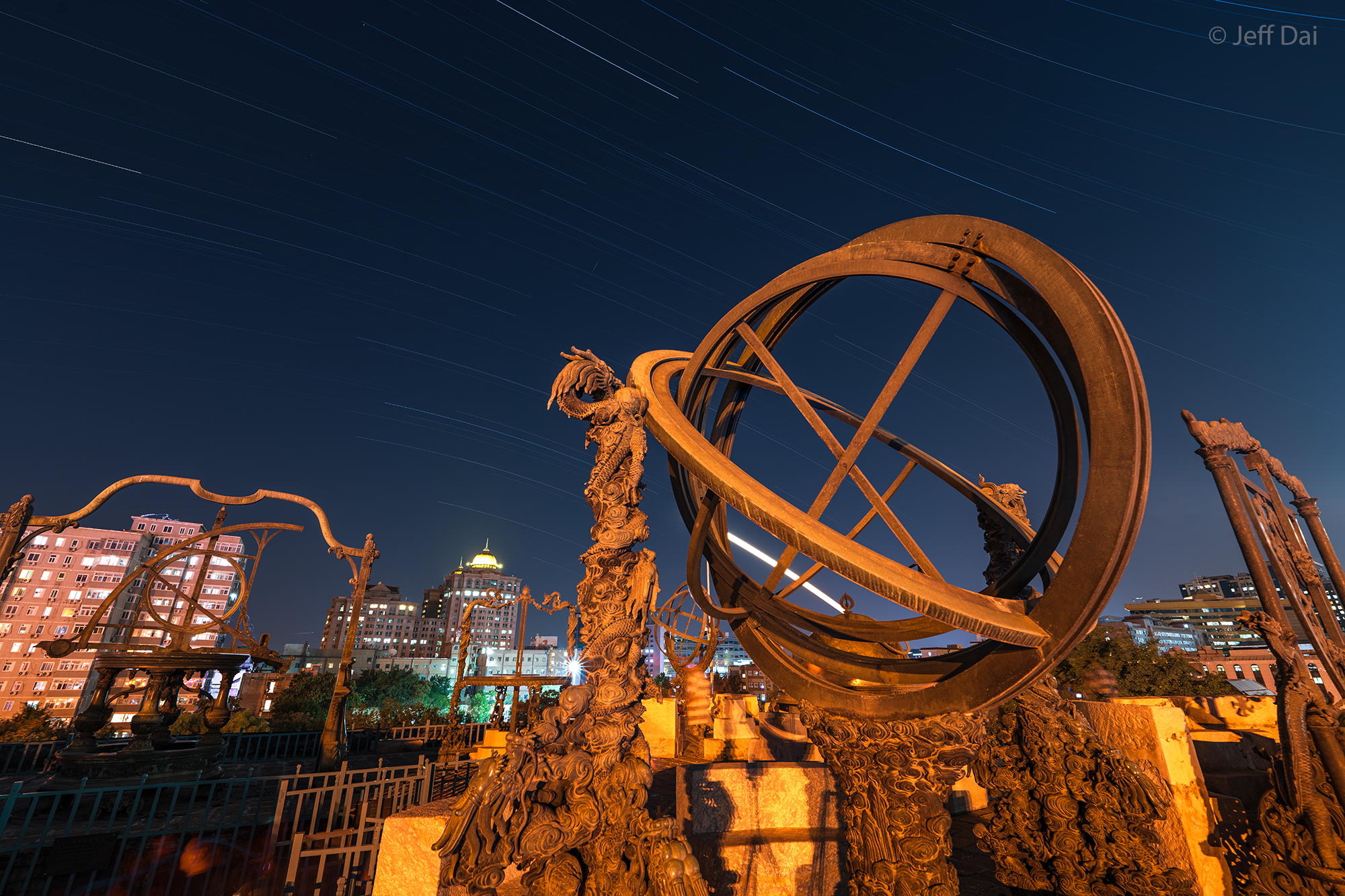
Startrails over Beijing Ancient Observatory
02/12/2023
You can take a subway ride to visit this observatory in Beijing, China but you won't find any telescopes there. Starting in the 1400s astronomers erected devices at the Beijing Ancient Observatory site to enable them to accurately measure and track the positions of naked-eye stars and planets. Some of the large, ornate astronomical instruments are still standing. You can even see stars from the star observation platform today, but now only the very brightest celestial beacons are visible against the city lights. In this time series of exposures from a camera fixed to a tripod to record graceful arcing startrails, the brightest trail is actually the Moon. Its broad arc is seen behind the ancient observatory's brass armillary sphere. Compare this picture from the Beijing Ancient Observatory taken in September 2023 to one taken in 1895.
Copyright: Jeff Dai
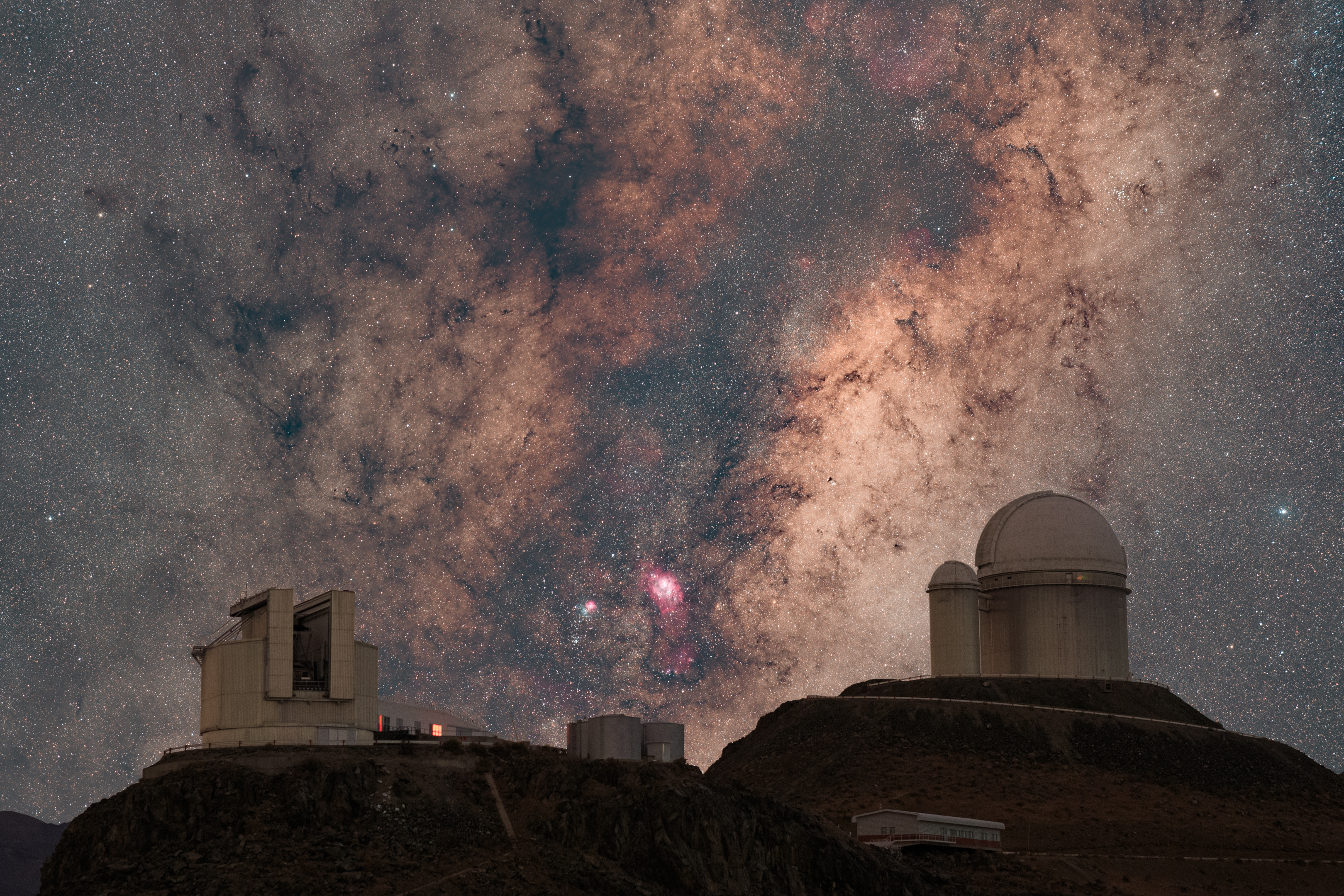
Milky Way Rising
01/12/2023
The core of the Milky Way is rising beyond the Chilean mountain-top La Silla Observatory in this deep night skyscape. Seen toward the constellation Sagittarius, our home galaxy's center is flanked on the left, by the European Southern Observatory's New Technology Telescope which pioneered the use of active optics to accurately control the shape of large telescope mirrors. To the right stands the ESO 3.6-meter Telescope, home of the exoplanet hunting HARPS and NIRPS spectrographs. Between them, the galaxy's central bulge is filled with obscuring clouds of interstellar dust, bright stars, clusters, and nebulae. Prominent reddish hydrogen emission from the star-forming Lagoon Nebula, M8, is near center. The Trifid Nebula, M20, combines blue light of a dusty reflection nebula with reddish emission just left of the cosmic Lagoon. Both are popular stops on telescopic tours of the galactic center. The composited image is a stack of separate exposures for ground and sky made in April 2023, all captured consecutively with the same framing and camera equipment.
Copyright: José Rodrigues
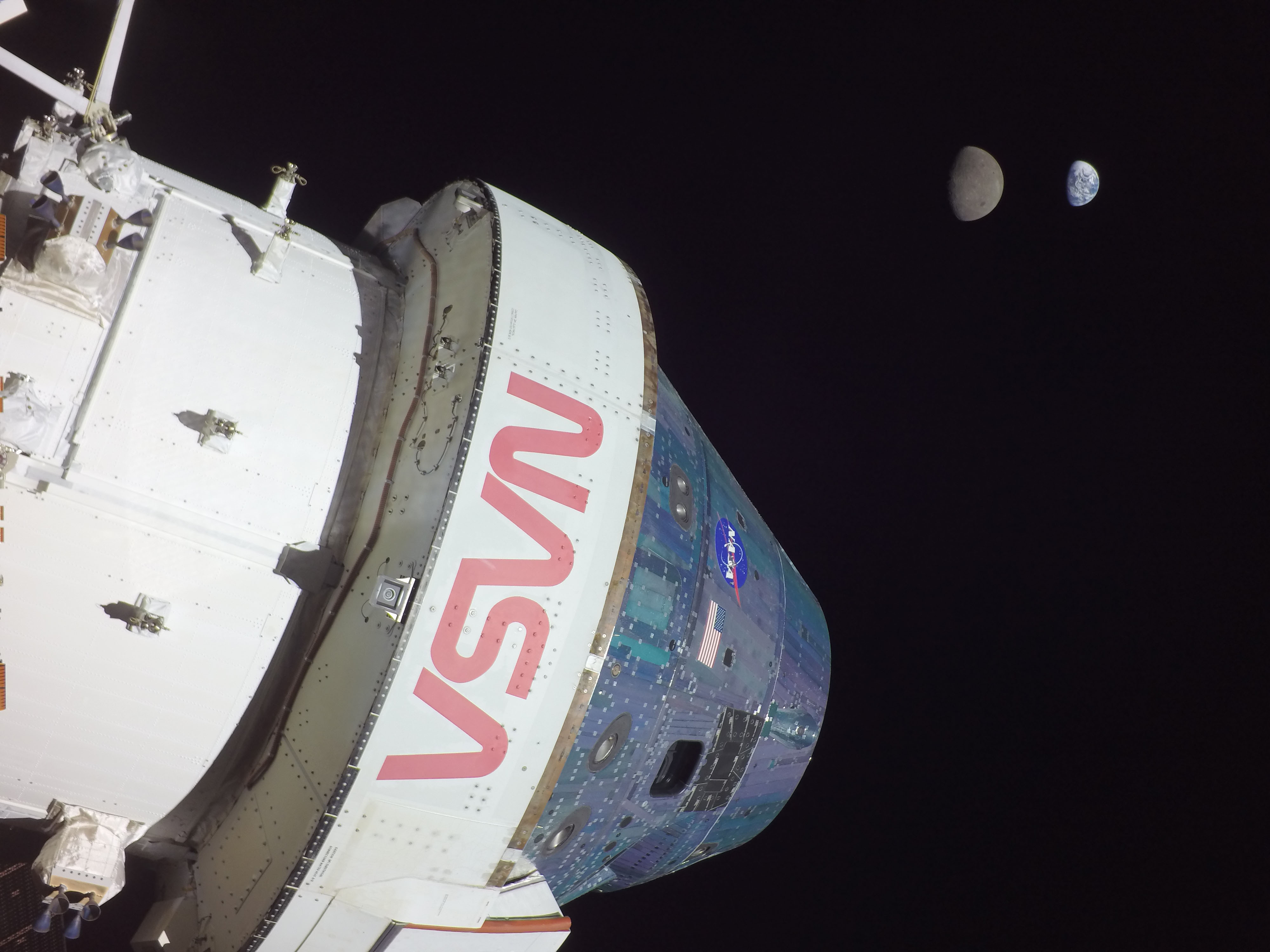
Artemis 1: Flight Day 13
30/11/2023
On flight day 13 (November 28, 2022) of the Artemis I mission, the Orion spacecraft reached its maximum distance from its home world. Over 430,000 kilometers from Earth in a distant retrograde orbit, Orion surpassed the record for most distant spacecraft designed to carry humans. That record was previously set in 1970 during the Apollo 13 mission to the Moon. Both Earth and Moon are in the same field of view in this video frame from Orion on Artemis I mission flight day 13. The planet and its large natural satellite even appear about the same apparent size from the uncrewed spacecraft's perspective.
Copyright: NASA
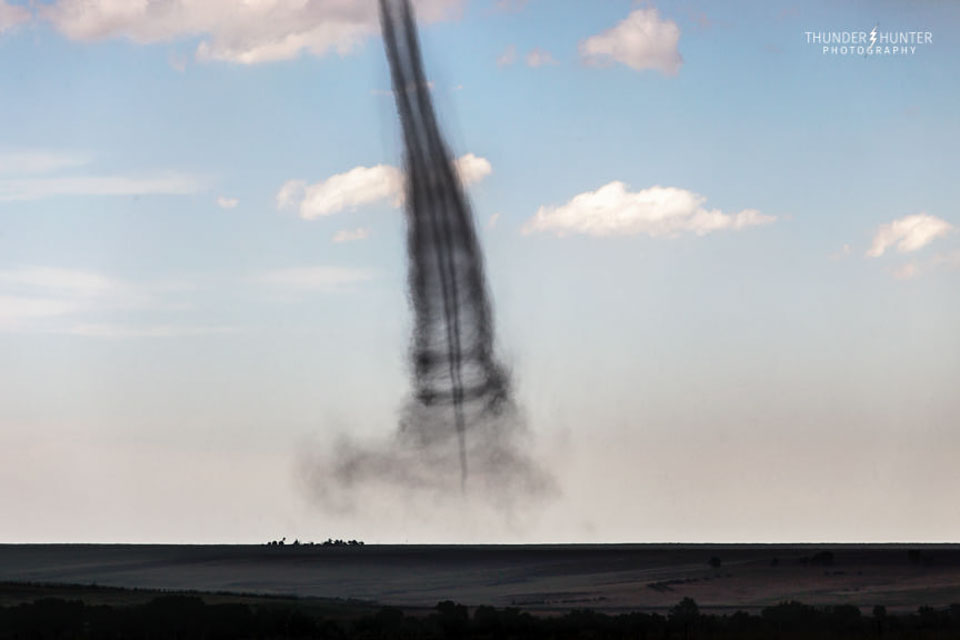
A Landspout Tornado over Kansas
29/11/2023
Could there be a tornado inside another tornado? In general, no. OK, but could there be a tornado inside a wider dust devil? No again, for one reason because tornados comes down from the sky, but dust devils rise up from the ground. What is pictured is a landspout, an unusual type of tornado known to occur on the edge of a violent thunderstorm. The featured landspout was imaged and identified in Kansas, USA, in June 2019 by an experienced storm chaser. The real tornado is in the center, and the outer sheath was possibly created by large dust particles thrown out from the central tornado. So far, the only planet known to create tornados is Earth, although tornado-like activity has been found on the Sun and dust devils are common on Mars. Almost Hyperspace: Random APOD Generator
Copyright: Brad Hannon
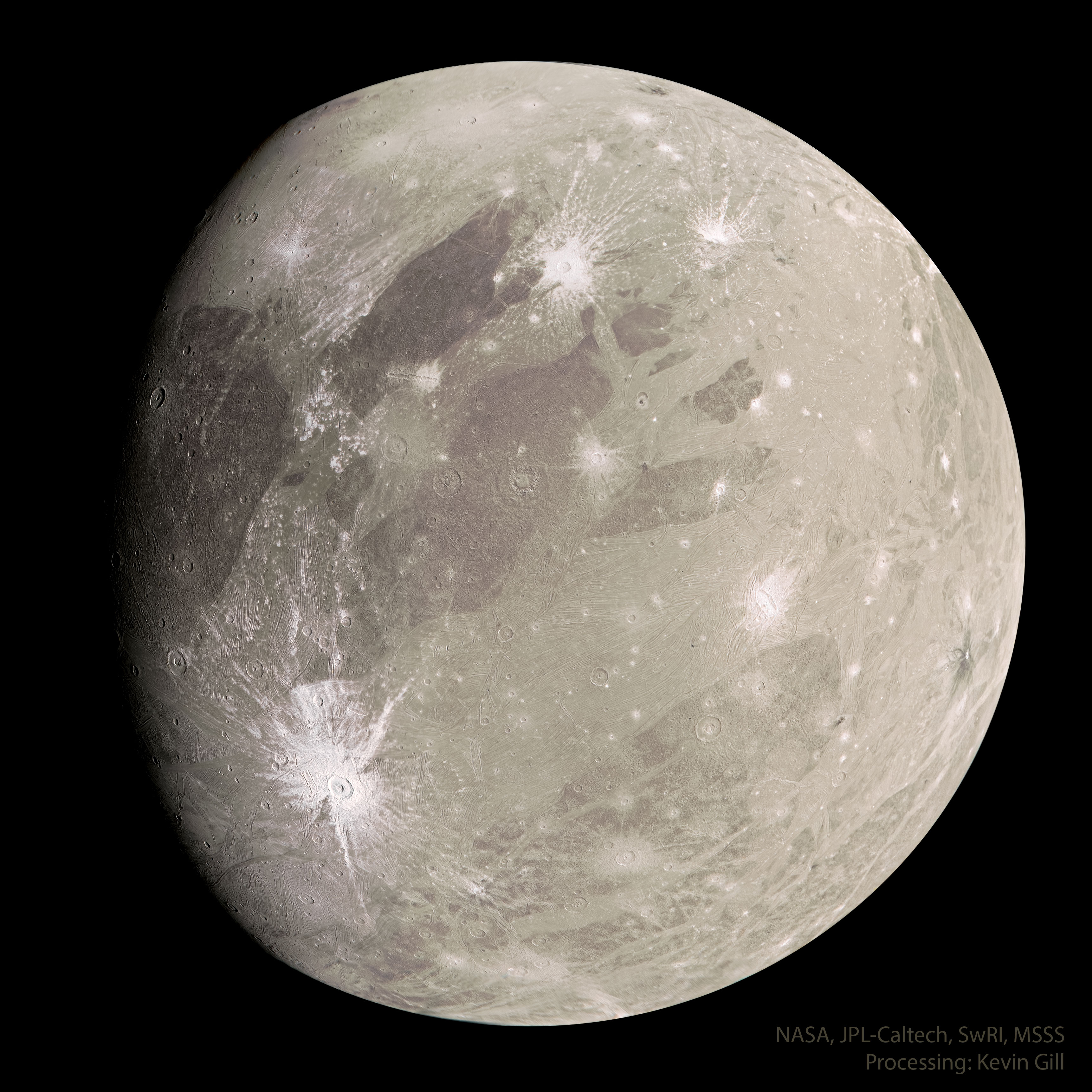
Ganymede from Juno
28/11/2023
What does the largest moon in the Solar System look like? Jupiter's moon Ganymede, larger than even Mercury and Pluto, has an icy surface speckled with bright young craters overlying a mixture of older, darker, more cratered terrain laced with grooves and ridges. The cause of the grooved terrain remains a topic of research, with a leading hypothesis relating it to shifting ice plates. Ganymede is thought to have an ocean layer that contains more water than Earth -- and might contain life. Like Earth's Moon, Ganymede keeps the same face towards its central planet, in this case Jupiter. The featured image was captured in 2021 by NASA's robotic Juno spacecraft when it passed by the immense moon. The close pass reduced Juno's orbital period around Jupiter from 53 days to 43 days. Juno continues to study the giant planet's high gravity, unusual magnetic field, and complex cloud structures. Follow Podcasts about APOD's Images: on YouTube
Copyright: NASA/JPL-Caltech/SwRI/MSSS; Processing & License: Kevin M. Gill;
Η Αστρονομική Εικόνα της Ημέρας από τη NASA (NASA Astronomy Picture of the Day) είναι μια δωρεάν υπηρεσία που παρέχει καθημερινά μια εντυπωσιακή εικόνα από το σύμπαν, την λήψη της οποίας έχει πραγματοποιήσει κάποιος από τους αστρονόμους της NASA ή από κάποιον από τους δορυφόρους ή τα τηλεσκόπια που η NASA λειτουργεί. Οι εικόνες που εμφανίζονται καλύπτουν μια ευρεία γκάμα από θέματα, συμπεριλαμβανομένων των αστερισμών, των γαλαξιών, των πλανητικών συστημάτων, των κομητών, των αστρικών σωμάτων και των παρατηρητηρίων. Κάθε εικόνα συνοδεύεται από μια σύντομη εξήγηση και πληροφορίες σχετικά με το τι παρατηρείται στην εικόνα.